
The advances in technology for banking have significantly automated bookkeeping. However anyone dealing with financial records is aware that the automated system doesn’t always perform as expected. Bank feeds disconnect, historical transactions may be unavailable, and clients still send statements in PDF format. In the event of this, someone has to turn a document intended for reading into data that accounting software could actually utilize.
A bank statement converter can take away a significant portion of the repetitive work required in this process. Instead of manually entering dates and descriptions, withdraws, and deposits row by row Docubrew converts information from the statement into a structured spreadsheet ready for use.
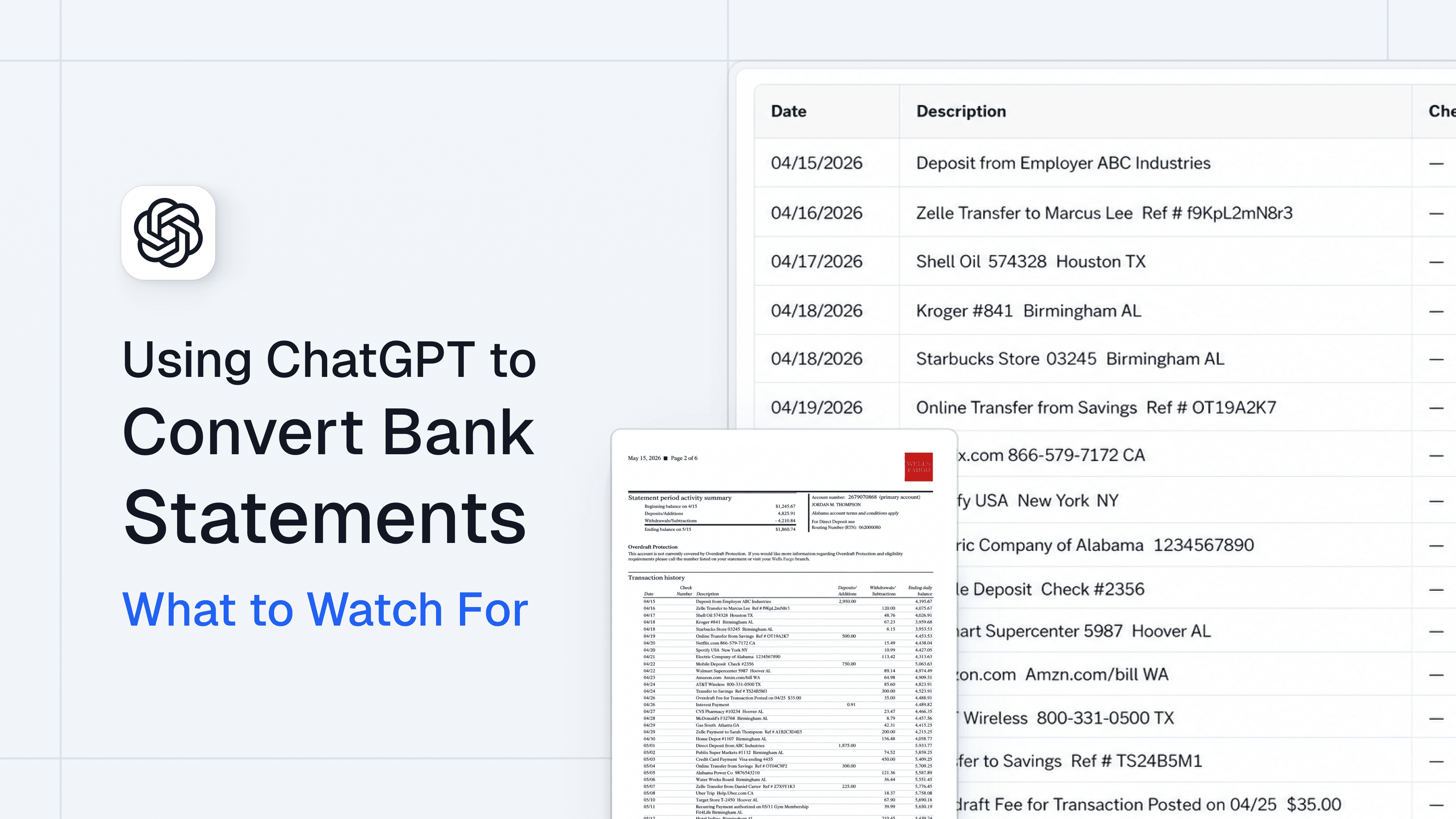
Image credit: docubrew.com
When a PDF Becomes the missing piece
Imagine a bookkeeper who is making the year-end reconciliation for an incoming customer. The accounting platform has the most recent transactions, however, several older months are not included. The client had downloaded the PDF original statements.
It was once a process of hours of tedious copying into a spread sheet. A PDF bank account statement to Excel workflow provides a more convenient alternative. Docubrew can extract transaction information from digital PDFs and scan bank statements made of paper.
The reduction of manual transcription is an excellent way to decrease the chance of typing mistakes for professionals who need to transfer bank balances to Excel on a regular basis.
Keep the Pages That Actually count
The bank statements aren’t just composed of transactions. A 12-page document might contain the cover sheet, account summary, disclosures, notices and a few pages of bank transactions.
Docubrew allows users to see a document’s preview and select the appropriate pages for conversion. That makes it easier to convert bank statements to Excel without bringing unrelated statement content into the working dataset.
After the file has been processed and opened, it is able to be opened in Excel or integrated into accounting platforms such as QuickBooks, Xero, FreshBooks, etc.
CSV Facilitates Flexible Accounting Workflow
CSV is still useful, as it’s widely supported by spreadsheets and databases. Accounting software also supports CSV. If you require the bank statement in CSV, Docubrew produces structured output based upon the transaction table that is within the report.
The same workflow is used to transform bank statements into CSV files for various uses, including the reconstruction of the past, starting an undertaking to cleanse the client database that is not being used, analyzing missing transactions or preparing the information to be used in reconciliation.
Accounting firms who need to manage many clients or statements can find batch processing particularly useful.
Financial Documents require careful consideration of privacy protections
When it comes to processing financial records, security isn’t the only factor to be considered. Bookkeepers and accountants could also be concerned with the location in which they handle financial records.
Docubrew offers two options. Windows desktop software handles files on the personal computer of the user, and the statements do not need to be uploaded in order to be converted. If you prefer working with a browser choose the encrypted cloud version, where uploaded files are automatically deleted within 24 hours.
This distinction is what differentiates Excel software, which is based solely on remote processing from the platform for bank statements.
Turning Document Archives Back Into Working Data
While PDF statements are excellent records, they are inconvenient to use when transactions have to be reconciled or sorted. They are also not able to be used to import, filter, or re-organize, etc. Scanned files can pose problematic since transaction data could only be present as a picture.
Docubrew is a solution that combines statement parsing and OCR for scanned documents. It gives accountants businesspeople, and bookkeepers a easy way to convert the financial documents of archives into useful transactional data.
This results in a boost of a procedure that was previously arduous The bank statement is still used as the financial record it was originally but the transaction table turns into information you can use.